Is the MZS1065 Zoom Stereo Microscope the Best Choice for Precision Inspection?
At MTscope, we understand the frustration engineers face daily: trying to solder a microscopic component while battling a microscope that leaves no room for your
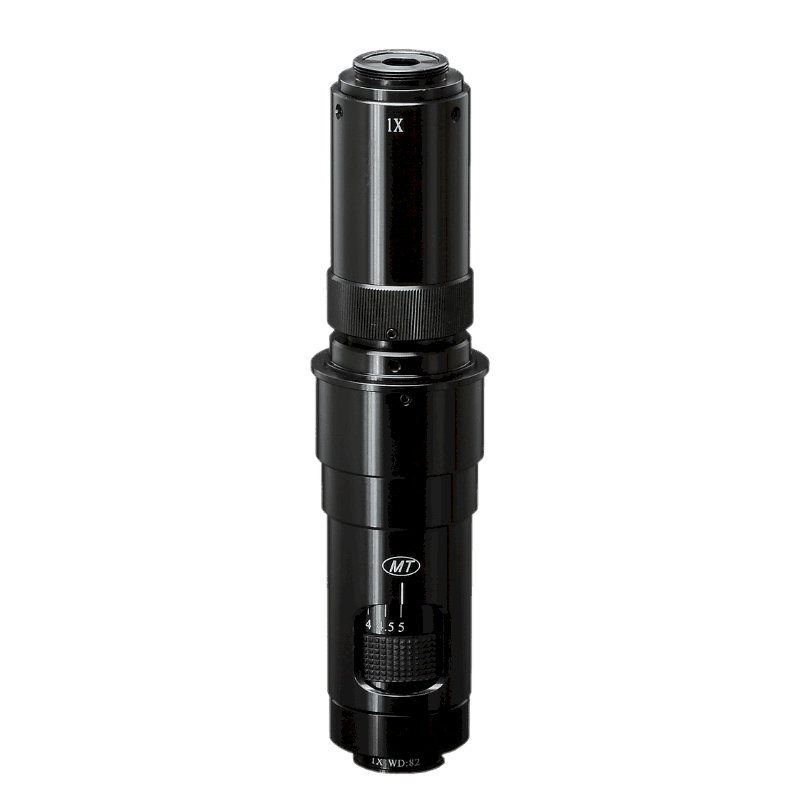
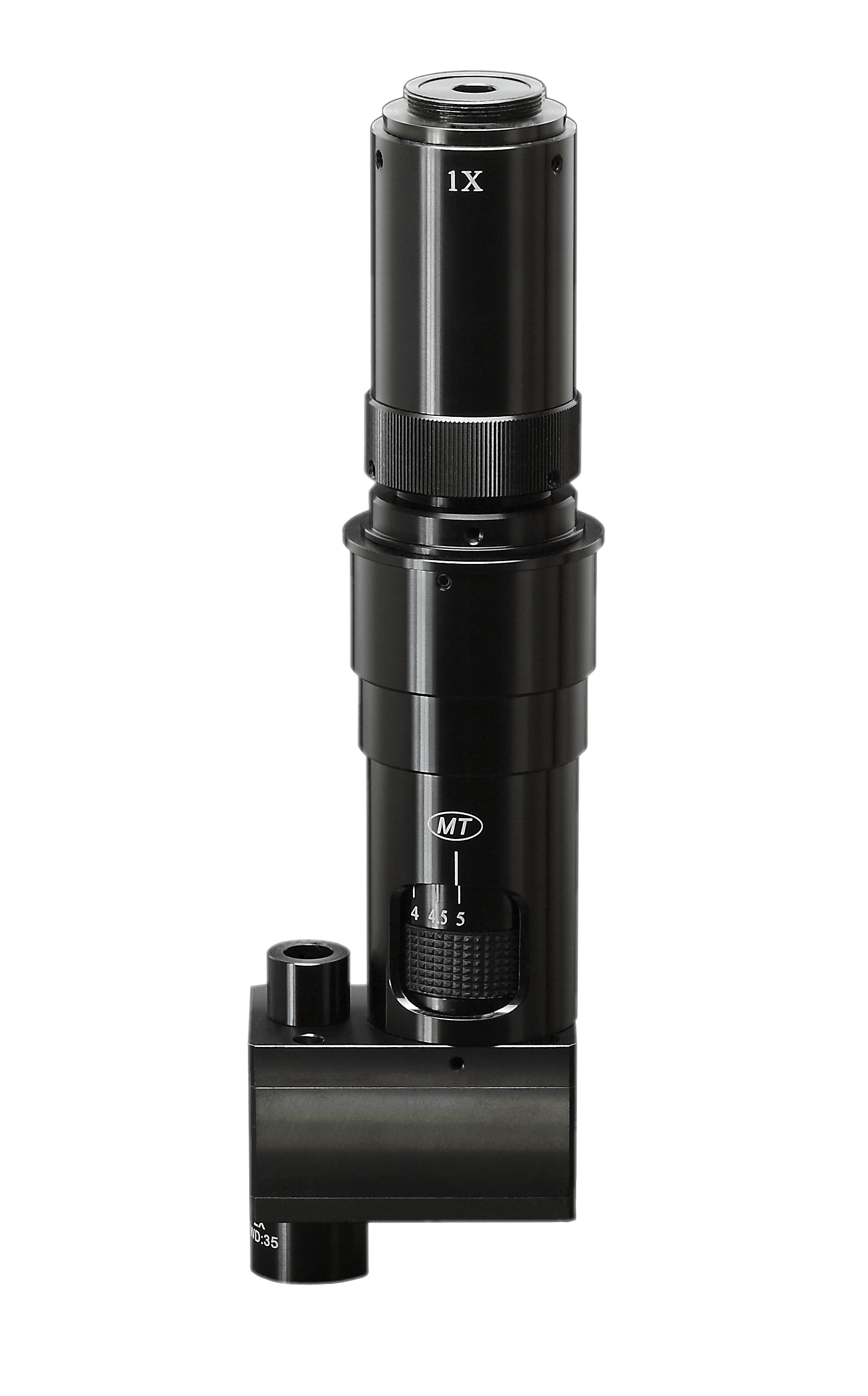
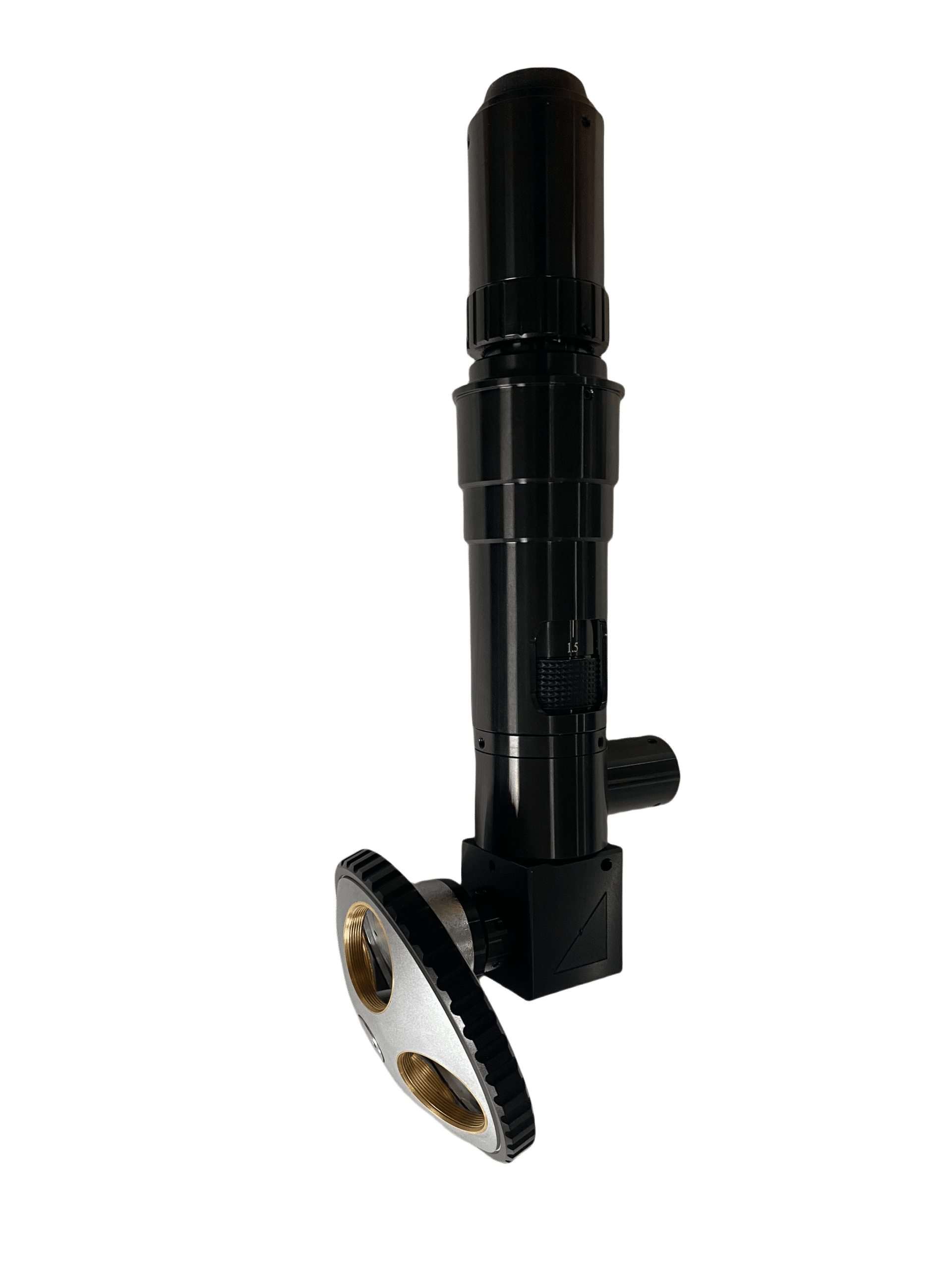
The MTO MZDH0850 series is a modular, high-performance parfocal zoom lens designed for high-precision industrial inspection, automated vision systems, and semiconductor QA. Featuring an infinity-corrected optical system, a 6.7:1 zoom ratio, and cross-brand metallurgical objective compatibility, it delivers distortion-free, high-contrast imaging under the most demanding production environments.
Zoom Range: 0.75X – 5.0X (Continuous)
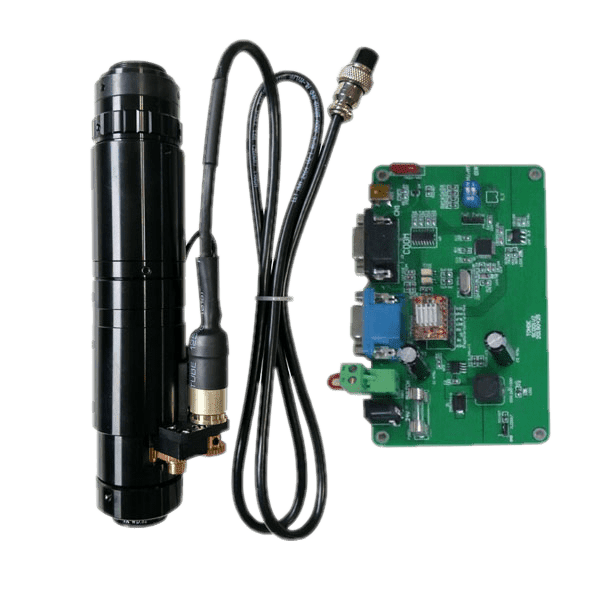
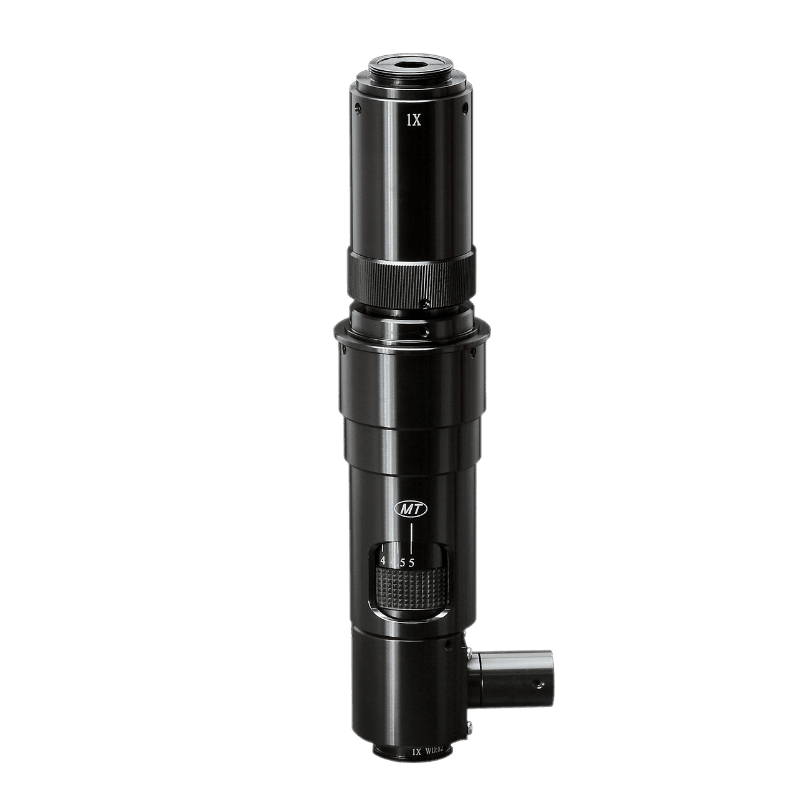
Optical Options: Standard, Coaxial Illumination (MZDH0850C), and Motorized Zoom models available.
Applications: Semiconductor wafer inspection, PCB assembly, LCD/LED testing, and precision metrology.
| Optical Mag. | 0.75X~5X |
|---|---|
| Zoom Ratio | 6.7:1 |
| Mounting Size | φ45mm |
| Working Distance | 82mm |
True Parfocal Precision (Zero Re-focusing): Time is money on high-throughput automated inspection lines. The MZDH0850 maintains perfect focus throughout the entire 6.7:1 zoom range. Set the focus once, zoom freely, and eliminate software re-focusing delays.
Coaxial Illumination for Zero-Glare Inspection: Highly reflective surfaces like polished metals, silicon wafers, and glass screens often cause blinding glare. The MZDH0850C integrated coaxial light path delivers perfectly uniform, shadow-free illumination right through the lens.
Infinite Optical System & Brand Compatibility: Designed with flexibility in mind. Our infinity-corrected system allows you to directly mount high-power metallurgical objectives from world-class brands (Nikon, Olympus, Mitutoyo) to instantly upgrade your magnification and resolution.
Ultra-Flexible Working Distance (WD): Adaptation is seamless. By swapping optional auxiliary objectives (0.3X, 0.5X, 0.75X, 1.5X, 2.0X), you can configure a working distance from 16mm to 293mm to accommodate robotic arms, pick-and-place clearance, or complex chassis constraints.

| Magnification | NA | DOF | Resolution | Distortion | Fixed Dim.:Φ45mm |
| 0.75X | 0.03 | 1.8mm | 11.2μm | 0.26% | |
| 2.0X | 0.067 | 0.30mm | 5.0μm | 0.31% | |
| 5.0X | 0.097 | 0.08mm | 3.5μm | 0.12% |
| Objectives | Item | CCD adapter | ||||||
| 0.3X | 0.4X | 0.5X | 0.67X | 1X | 1.5X | 2X | ||
| 0.3X | Optical. Mag. | 0.07X~0.45X | 0.09X~0.6X | 0.11X~0.75X | 0.15X~1X | 0.225X~1.5X | 0.34X~2.25X | 0.45X~3X |
| WD:293mm | FOV(mm) | 51.4X68.6~8X10.67 | 40X53.33~6X8 | 32.7X43.6~4.8X6.4 | 24X32~3.6X4.8 | 16X21.3~2.4X3.2 | 10.6X14.12~1.6X2.13 | 8X10.67~1.2X1.6 |
| 0.5X | Optical. Mag. | 0.11X~0.75X | 0.15X~1X | 0.19X~1.25X | 0.25X~1.675X | 0.375X~2.5X | 0.56X~3.75X | 0.75X~5X |
| WD:175mm | FOV(mm) | 32.7X43.6~4.8X6.4 | 24X32~3.6X4.8 | 18.9X25.3~2.88X3.84 | 14.4X19.2~2.15X2.9 | 9.6X12.8~1.44X1.92 | 6.4X8.6~0.96X1.28 | 4.8X6.4~0.72X0.96 |
| 0.75X WD:117mm | Optical. Mag. | 0.17X~1.125X | 0.225X~1.5X | 0.28X~1.875X | 0.4X~2.5X | 0.56X~3.75X | 0.84X~5.625X | 1.125X~7.5X |
| FOV(mm) | 21.2X28.2~3.2X4.27 | 16X21.33~2.4X3.2 | 12.9X17.1~1.92 X2.56 | 9X12~1.44 X1.92 | 6.4X8.6~0.96X1.28 | 4.3X5.7~0.64X0.85 | 3.2X4.27~0.48X0.64 | |
| 1X | Optical. Mag. | 0.225X~1.5X | 0.3X~2X | 0.375X~2. 5X | 0.5X~3.35X | 0.75X~5X | 1.125X~7.5X | 1.5X~10X |
| WD:82mm | FOV(mm) | 16X21.3~2.4X3.2 | 12X16~1.8X2.4 | 9.6X12.8~1.44X1.92 | 7.2X9.6~1.07X1.4 | 4.8X6.4~0.72X0.96 | 3.2X4.27~0.48X0.64 | 2.4X3.2~0.36X0.48 |
| 1.5X | Optical. Mag. | 0.34X~2.25X | 0.45X~3X | 0.5625X~3.75X | 0.75X~5X | 1.125X~7.5X | 1.6875X~11.25X | 2.25X~15X |
| WD:54mm | FOV(mm) | 10.6X14.1~1.6X2.13 | 8X10.67~1.2X1.6 | 6.4X8.53~0.96X1.28 | 4.8X6.4~0.72X0.96 | 3.2X4.27~0.48X0.64 | 2.13X2.84~0.32X0.43 | 1.6X2.13~0.24X0.32 |
| 2X | Optical. Mag. | 0.45X~3X | 0.6X~4X | 0.75X~5X | 1X~6.7X | 1.5X~10X | 2.25X~15X | 3X~20X |
| WD:35mm | FOV(mm) | 8X10.7~1.2X1.6 | 6X8~0.9X1.2 | 4.8X6.4~0.72X0.96 | 3.6X4.8~0.54X0.72 | 2.4X3.2~0.36X0.48 | 1.6X2.1~0.24X0.32 | 1.2X1.6~0.18X0.24 |
| 4.5X | Optical. Mag. | 1.01X~6.75X | 1.35X~9X | 1.69X~11.25X | 2.26X~15.07X | 3.37X~22.5X | 5.06X~33.75X | 6.75X~45X |
| WD:16mm | FOV(mm) | 3.56X4.74~0.53X0.71 | 2.67X3.56~0.4X0.53 | 2.13X2.84~0.32X0.43 | 1.59X2.12~0.24X0.32 | 1.07X1.42~0.16X0.21 | 0.71X0.95~0.11X0.14 | 0.53X0.71~0.08X0.11 |
| Zoom body magnification range: 0.75X~5X | ||||||||
| Auxiliary illuminators | MLC1000,MLR25 |
| CCD adapters | 0.4X, 0.5X, 0.67X, 1.0X(Standard outfits),1.5X,2.0X |
| Objectives | 0.3X,0.4X,0.5X,0.6X,0.75X,0.9X, |
| Infinite farness metallographic lens | Nikon, Olympus, Mitutoyo |
| Stands | SD1-D ~ SD18-D |
The MZDH0850 series offers multiple configurations to cater to your specific requirements:


It has advantages on the applications as below:
A: We highly recommend the MZDH0850C-PL model. Reflective objects like metal shields, gold-plated PCBs, or LCD glass create severe glare under normal lighting. The MZDH0850C-PL features coaxial illumination combined with an integrated polarizing lens. By adjusting the polarizer, you can block glare, eliminate blinding hot spots, and drastically enhance image contrast to see microscopic surface details clearly.
A: The selection follows a simple logic based on your required Working Distance (WD) and Field of View (FOV). If your robotic assembly line requires a large clearance space, choose the 0.3X or 0.5X objective lens to achieve a working distance of 293mm or 175mm. If you need extreme high-power magnification and can accept a tighter space, choose the 2X or 5X lens. Match this with a CCD adapter size (e.g., 0.5X or 1X) that fits your camera sensor to prevent vignetting (dark corners on the screen).
A: The maximum magnification of the MZDH0850 series is 45X with the standard zoom objective lens and CCD adaptors. However, the system supports various objective lenses with different magnifications, allowing you to customize it for your specific needs.
A: Yes, certain models like the MZDH0850-AF offer motorized zoom with stepper motors for precise magnification adjustments. This ensures accurate and repeatable zoom changes, particularly useful for automated processes.
A: The working distance varies depending on the objective lens used. For example, with the 0.75X objective lens, the working distance is 117mm, providing a good balance between magnification and depth of field.
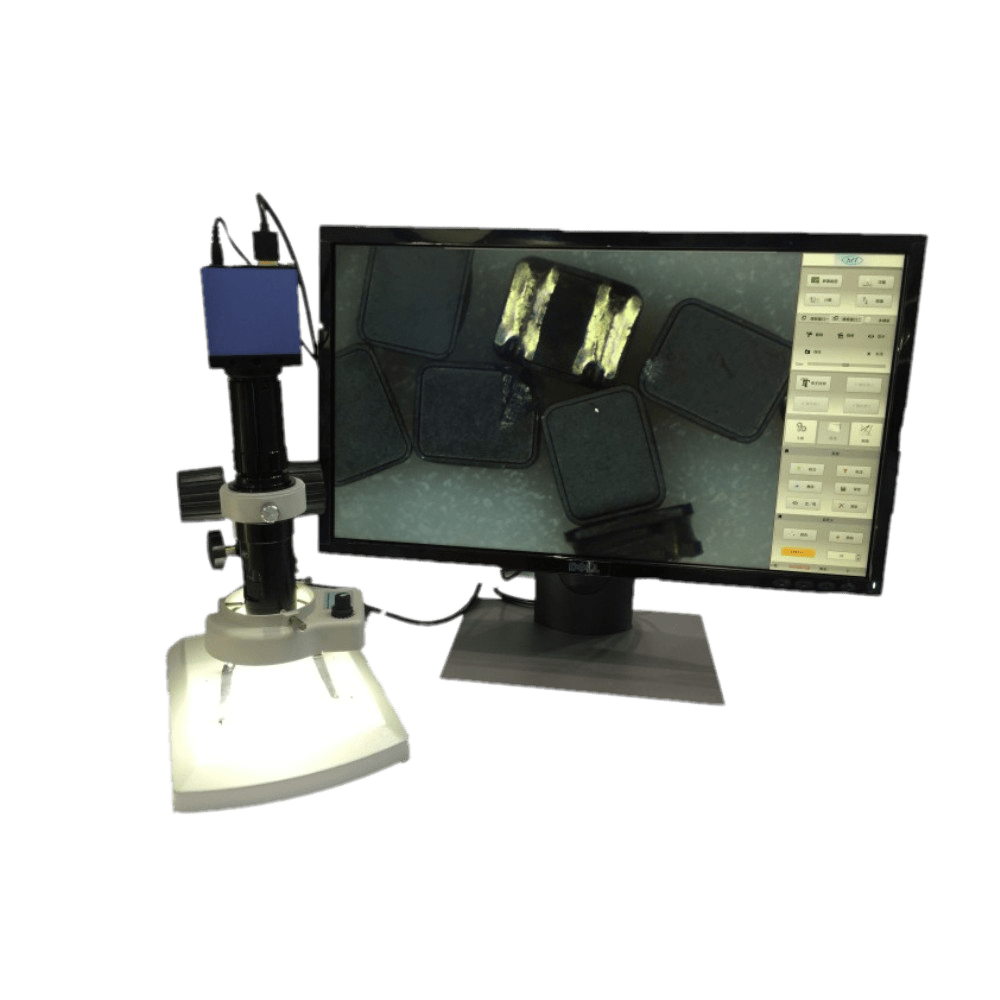
A: Yes, the MZDH0850 series supports a variety of CCD and CMOS cameras, and the system includes adapters for different camera interfaces. You can easily integrate a camera to capture high-quality images or videos for documentation or analysis. However, you need to learn how to adjust the focal length and centre between the zoom lenses and the camera to ensure parfocal.
If you have interest to get the details, please contact us.
A: Absolutely. The MZDH0850 series features coaxial illumination, which provides uniform lighting even on reflective surfaces like metals and wafer. This ensures clear, high-contrast images without the need for additional external lighting.
A: Yes, the MZDH0850 series offers customizable options including a range of objective lenses, CCD adaptors, lighting systems, and camera interfaces. We can help you configure the system to suit your unique application needs.
A: The MZDH0850 is highly beneficial for industries such as electronics, semiconductors, optical components manufacturing, material science, and medical device production. Its versatility and high-resolution capabilities make it suitable for a wide range of precision inspection and measurement tasks.
A: The MZDH0850 is designed for easy installation and setup. Its compact design and modular components simplify the integration process, and we provide support for installation and calibration if needed.


At MTscope, we understand the frustration engineers face daily: trying to solder a microscopic component while battling a microscope that leaves no room for your

As an optical engineer at Guilin Microtech (MTO), I have often observed that in the world of semiconductor and micro-CNC machining, the difference between “good”

In our years in the optical instruments industry, we’ve seen countless companies struggle with one critical decision: choosing the right microscope. This isn’t just about

What Are the Essential Functions of Microscopes in Wafer Probe Stations? Have you ever wondered what makes a microscope indispensable for wafer probe stations? In

Table of Contents 1. What Challenge Did We Face? In this case study, we explore how a Weld Seam Inspection Monocular Lens helps manufacturers ensure

We are thrilled to announce our participation in the LASER World of PHOTONICS CHINA 2025, Asia’s premier trade fair for the photonics industry. This event will